C-V2X intelligent road-side infrastructure deployed at intersections and road segments
Designed for Vehicle–Road–Cloud integration pilots, Connected & Intelligent Vehicle demonstration zones, and smart transportation new infrastructure, it integrates 5G Uu cellular backhaul with C-V2X PC5 direct communication and embeds the ITS application protocol stack. It supports interfacing with road-side perception devices such as signal controllers, cameras, millimeter-wave radar, and LiDAR, enabling multi-source data fusion, real-time traffic incident detection, and V2X message broadcasting, building an information bridge between "smart roads" and "intelligent vehicles".
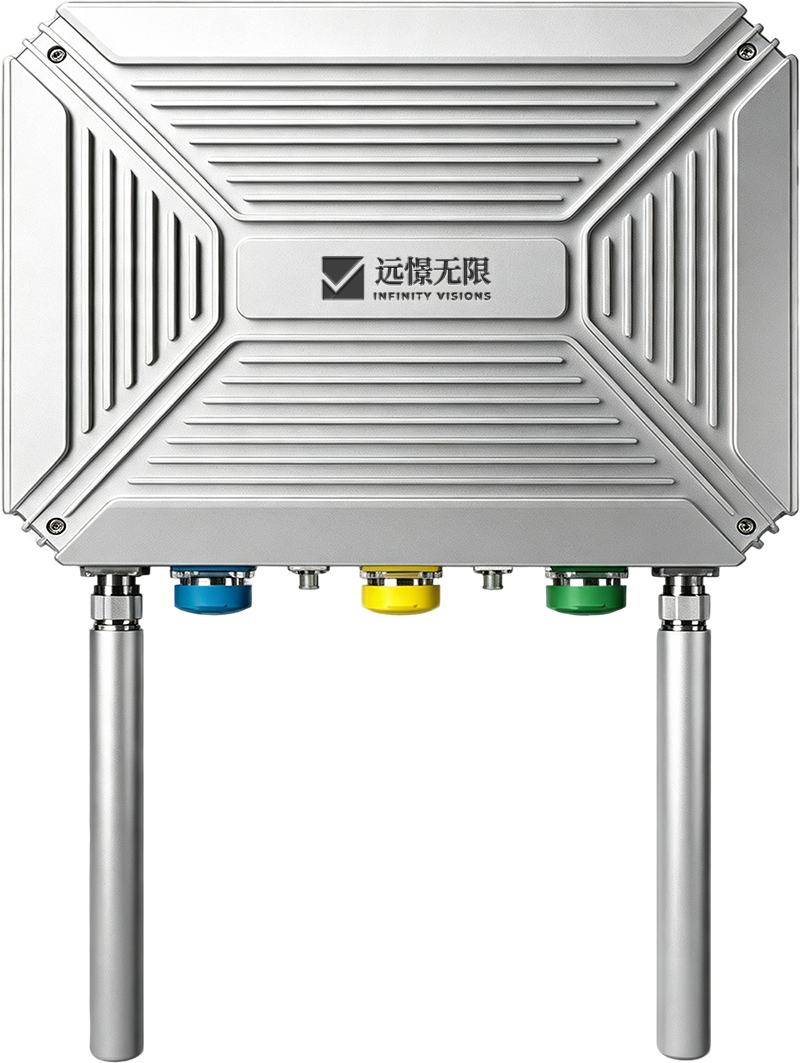
The RSU is key infrastructure for the vehicle–road collaboration system. Through C-V2X PC5 direct communication, the RSU broadcasts traffic-light phases, traffic incidents, and road hazard warnings to nearby vehicles; via 5G Uu it connects to the cloud platform to enable remote O&M, data aggregation, and traffic situation analysis, providing stable and reliable road-side capability support for smart intersections, smart highways, and autonomous-driving demonstration zones.
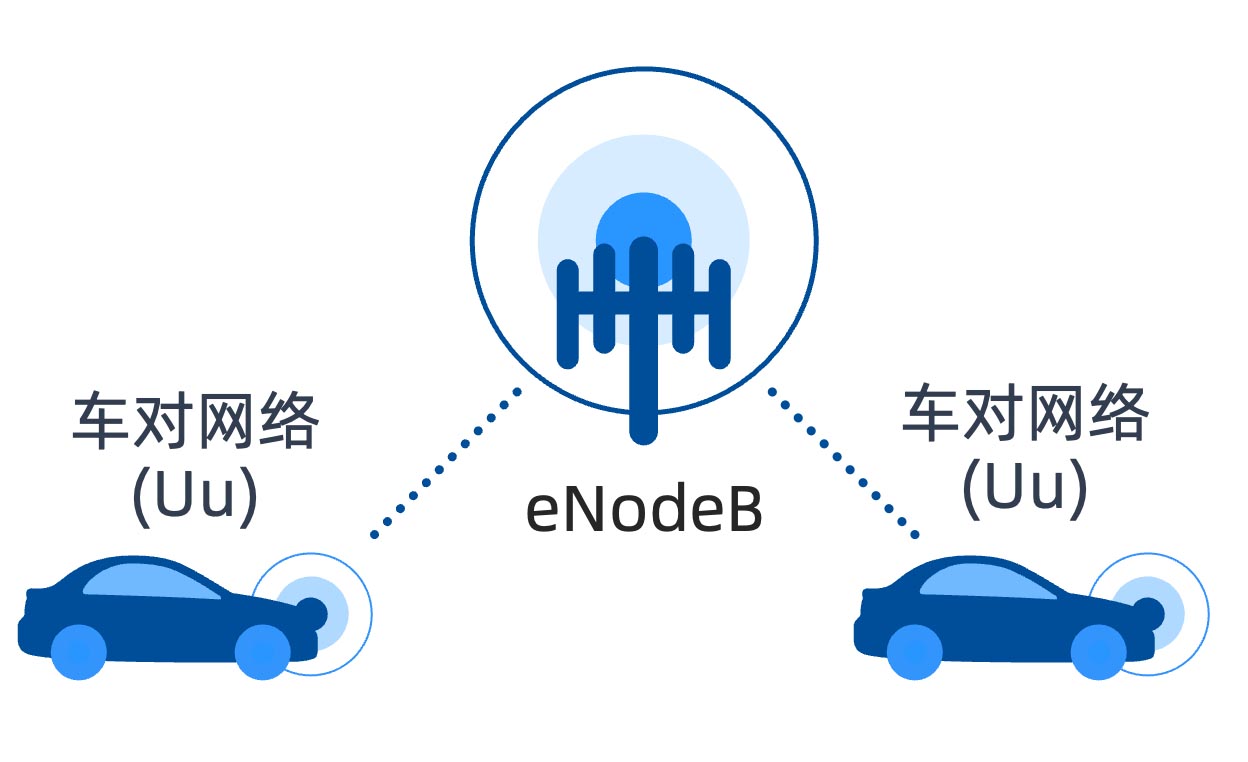
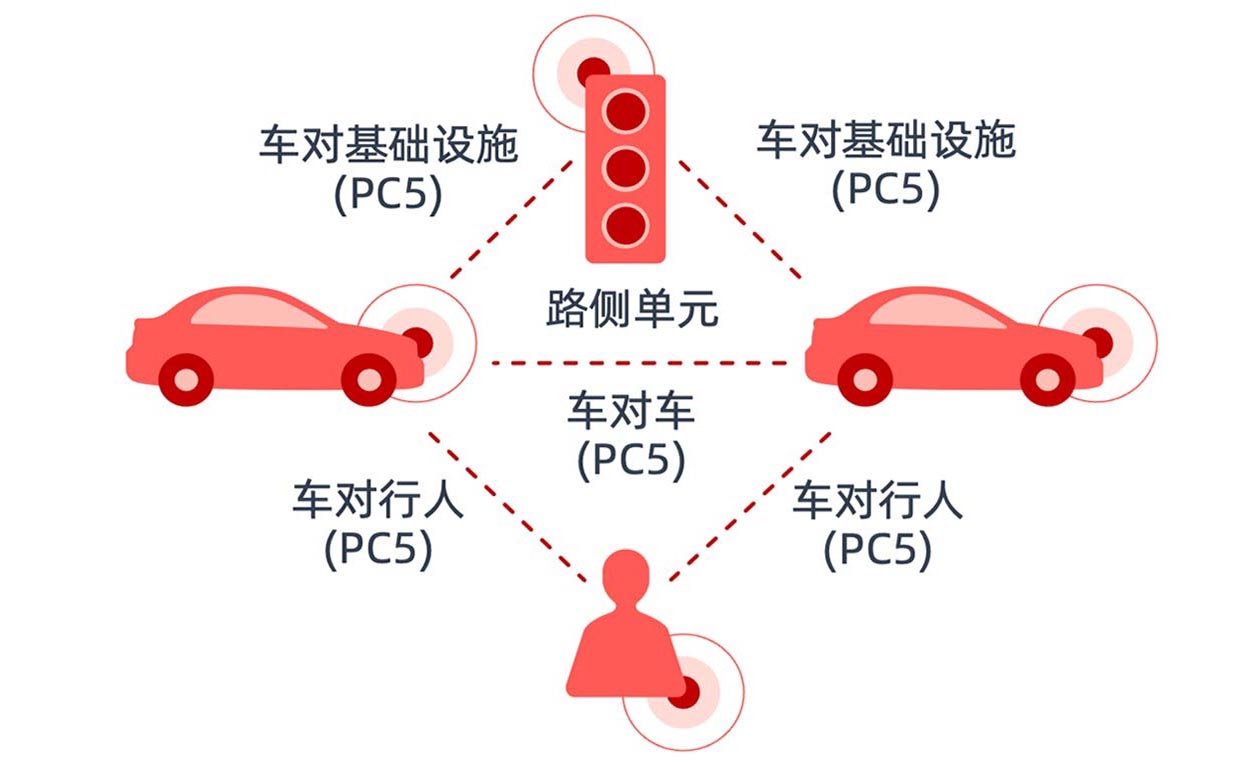
The RSU simultaneously supports 5G Uu cellular links and C-V2X PC5 direct links. Uu handles high-bandwidth data backhaul and remote O&M, while PC5 handles millisecond-level low-latency coordination among vehicle-to-vehicle, vehicle-to-road, and vehicle-to-pedestrian, together forming the communication foundation for Vehicle–Road–Cloud integration.
Vehicles access the cellular network via 5G base stations, supporting OTA upgrades, high-precision map downloads, HD video backhaul, and remote driving, and providing a high-bandwidth backhaul channel for cloud-platform big-data analysis.
Vehicles and RSUs, vehicles and vehicles, and vehicles and pedestrians communicate directly via C-V2X PC5, enabling traffic-light status broadcasting, road hazard warnings, and vulnerable road-user protection, completing millisecond-level low-latency coordination without relying on base stations.
For city-scale Vehicle–Road–Cloud integration and Connected & Intelligent Vehicle infrastructure, it delivers highly reliable, low-latency, and easily deployable road-side communication and edge-computing capabilities.
Simultaneously supports 5G Uu cellular backhaul and C-V2X PC5 direct communication (5905–5925 MHz), balancing high-bandwidth data upload with millisecond-level vehicle-to-road / vehicle-to-vehicle coordination, and complies with industry standards such as T/CSAE 53 and T/CSAE 157.
Supports interfacing with road-side devices such as signal controllers, cameras, millimeter-wave radar, LiDAR, and vehicle detectors, enabling multi-source data aggregation, fusion analysis, and localized decision-making.
PC5 direct communication latency is as low as milliseconds, enabling real-time broadcasting of traffic-light status, traffic incidents, and road hazard warnings to nearby vehicles, meeting the real-time requirements of safety applications.
Optional interfaces such as adaptive Ethernet ports, optical fiber ports, and RS232 are available, supporting PoE power supply and 24/48V DC power supply, facilitating deployment in complex scenarios such as intersections, gantries, and tunnels.
Supports V2X digital certificate management, Chinese national cryptographic algorithms SM2/SM3/SM4, and international encryption algorithms, meeting the requirements for cross-OEM and cross-city interconnection and identity mutual recognition.
IP65 protection, -40℃ ~ +85℃ wide-temperature operation, lightning protection, and wide-voltage design adapt to long-term stable operation in harsh outdoor environments such as intersections, highways, tunnels, and ports.
Based on C-V2X PC5 direct links and 5G Uu cellular dual links, the RSU acts as a road-side information hub connecting vehicles, roads, pedestrians, and the cloud, supporting safety, efficiency, and autonomous-driving collaborative applications.
The RSU assists in forwarding BSM messages, supporting forward collision warning, emergency vehicle yielding, platooning, and beyond-line-of-sight coordination, compensating for single-vehicle perception blind spots.
Real-time broadcasting of SPAT signal phases, MAP maps, and RSI road events, enabling traffic-light countdown, green-wave speed guidance, and transit priority.
Combined with road-side camera/radar perception, it identifies pedestrians, non-motorized vehicle crossings, and blind-spot risks in advance, sending RSM vulnerable road-user warnings to vehicles.
Via 5G Uu, road-side perception data is aggregated to the V2X cloud-control platform, supporting remote O&M, device configuration push, traffic-flow analysis, and digital-twin visualization.
Key technical indicators of the road-side unit for Vehicle–Road–Cloud integration and smart transportation new infrastructure, for reference in project integration and solution evaluation.
For smart cities, smart highways, Connected & Intelligent Vehicle demonstration zones, and autonomous-driving test tracks, providing road-side infrastructure capabilities for traffic management and automakers.
Deployed at urban intersections, it interfaces with signal controllers and road-side perception devices to enable traffic-light information push, green-wave speed guidance, intersection collision warning, and vulnerable road-user protection.
Deployed along key expressway sections, tunnels, and service areas, it provides beyond-line-of-sight warnings, road hazard warnings, congestion warnings, adverse-weather warnings, and emergency-lane occupancy reminders.
Supports large-scale Vehicle–Road–Cloud integration pilots, providing V2X message broadcasting, road-side perception fusion, cloud-control platform access, and autonomous-driving collaborative perception capabilities.
For enclosed / semi-enclosed scenarios, it provides road-side collaborative perception and remote supervision for Robotaxis, autonomous container trucks, and unmanned sanitation vehicles, improving autonomous-driving safety and operational efficiency.
From intersection survey to large-scale deployment, providing full-process support services for Vehicle–Road–Cloud integration projects.
Clarify the project scenario (intersection / highway / demonstration zone), coverage scope, perception device types, cloud-platform interfaces, and delivery schedule.
RSU location planning, antenna layout, backhaul link, power supply scheme, V2X message configuration, and cloud-control platform integration confirmation.
On-site installation, device joint commissioning, signal controller / perception device access, V2X scenario verification, and cloud-control platform integration testing.
Remote O&M monitoring, OTA upgrades, device health management, and long-term technical support to ensure stable large-scale operation.
The Infinity-Visions professional team is ready to provide consultation, offering customized RSU deployment solutions for projects such as smart intersections, smart highways, and Vehicle–Road–Cloud integration pilots.
Contact Us